Load-Induced Conditions of Your Feet

A theme running through many of my posts on feet this month is alignment. What exactly is alignment? How does it differ from posture? Again, I lean on the words and ideas of another, my teacher biomechanist Katy Bowman, to elaborate on the concept of alignment and to relate it to my understanding of foot health. Posture is the positioning of your body parts in relationship to each other and to the ground. When you are standing still and you straighten your feet or back up your hips, you are creating a posture. When you are performing vrksasana (tree pose) in yoga that is a posture. Alignment, which encompasses posture, is a creation of forces by your body position (posture) while still or moving that loads your tissues. Posture is the positioning. Alignment is the loading forces on your body. Alignment is not just where your hips are (posture) but where all parts of your body are and how fast and hard and how often and in what direction they are moving; and your shape and what you are carrying and where; and the surfaces you are on or under; and the terrain and temperature; and the gear you are using and structures you are interacting with. Alignment is the interactions of all the variables in a particular system right now and whether the forces created by this system that load the tissues of your body are inflicting damage on any one part of the system. An aligned and well body does not damage itself.

Plantar fasciitis, bunions, hallux limitus and rigidus, bone spurs, metatarsalgia, Morton’s neuroma, and Achilles tendonitis could all be considered load-induced diseases of the foot. How are loads created to the tissues of our feet? Through our alignment.

Here are some major components of your walking alignment system that impact your feet :

  • body positioning
  • injuries
  • stride and pace
  • intensity of your foot strike
  • range of motion in your hips
  • innervation of your intrinsic foot musculature
  • gait pattern
  • weight
  • your backpack, purse, or other carried items and how you are carrying them
  • the terrain –  wood, tile, carpet, asphalt, concrete, dirt, grass, flat, lumpy, uphill, downhill, slick, hard, soft, holey
  • the shoes you are wearing. the shoes you are wearing. the shoes you are wearing. the shoes you are wearing.

Change one variable in an ecosystem and the impact ripples across that ecosystem, impacting all relationships to some degree. In the case of your feet, their current state is a reflection of their ecological history. Change one of the variables in the list above and you may not see a change. Change many, most, or all of them, and you will change your feet. You can still change your feet.

Namaste, Michele

Stop Distributing Your Weight Evenly Throughout Your Feet in Yoga!

I intended to post something on feet every day in January, but alas, embedded in all the knowledge I picked up at the gait workshop that I attended in Seattle (Walking the Lines: Anatomy Trains, Myofascial Efficiency & A Model of Gait), was something that feels like the flu.

I’m using my down time to read about the anatomy of feet and yoga, and was inspired to comment on a common yoga cue that I’d like to see go away.

“Spread your weight evenly from front to back”
“Distribute your weight across the four (or three) corners of your feet”
“Feel your weight in all parts of your foot”
“Your weight should be even across your big toe mound, baby toe mound, and heel”

You will hear some variation on this cue for Tadasana (mountain pose) in many yoga classes. Unfortunately, its not good instruction. If you follow this improper cue, then you will have an unnatural, strong forward lean of your body. The architecture of the foot is elegant and intricately complex on an a deep anatomy level, but quite simple on a gross level as pertains to weight bearing. Your heel bone (calcaneus) is the largest bone of your foot and is structurally located precisely below where the weight of your body is translated to the ground. Your lower leg bones and those of your feet make up your ankle joint, which is located above your strong, weight-accepting heel bone, not above the smaller bones (tarsals) and more slender bones (metatarsals) of your mid and forefoot, respectively. These smaller bones are meant to assist in transfer of weight during gait, propulsion of your body forward, and in supporting your arches but NOT to hold the mass of your weight. I go over this in more detail in my post on backing up your hips.

Even the cue to have “the majority” of your weight in your heels is not specific enough. The majority could be 60% and that is not enough weight in the heels. ALL of your weight should be borne by your heels. So if all of your weight is back in your heels, what is the rest of your foot doing? Wouldn’t it be lifted up off the ground? No.This is where your strong yoga foot comes into play. You can apply pressure to the ball of your foot by pressing it into the ground, without shifting your weight or hips forward.

Try it.

  1. Stand in Tadasana with your the front of your ankles the width of your ASIS bones (pelvic bones, “hip pointers)
  2. Line up the outer edges of your feet so that your outer ankle bones and the middle of your baby toes are in a straight line
  3. Sway your weight forward and back a few times, but then stop when your weight is fully back over your heels
  4. Press the balls of your feet into the floor
  5. Relax your toes
  6. Make sure to back your hips up until a side view in a mirror would show your hip joint directly over your knee joint directly over your ankle joint with all three joints stacked directly over your strong, meant-for-this-purpose calacanei.

Having a partner press their hands down firmly on the tops of yours shoulders should give you a sense of whether or not your weight is all the way in your heels. If it were spread evenly throughout your feet, you could buckle under the weight of your partner’s hands. If your weight is back, you can easily stand strongly under this downward pressure because you are using the vertical structure of your bones to resist downward force.

This is how you do Tadasana – not because it is part of any particular yoga lineage, but because it is optimal for the health of your feet. What’s the big deal if you are only doing Tadasana a few minutes per yoga class? Because what you do on the mat  often translates to what you do off of the mat – both the helpful and the harmful. This is how you do standing in line at the grocery. This is how you do standing around with a group of friends. This is how you do standing.

Namaste, Michele

Back Up Your Hips to Cure Your Feet

Alignment Habits

In an earlier post, I suggested that you have three habits that are critical for the health of your feet. And you have control over the outcomes of each habit. Total control!

  1. The shoes you (choose to) wear
  2. How you move your feet
  3. How you align yourself

Every time I consider this list, I am tempted to declare that one is more important than the others. But, I never do, because they are equally culpable in impacting the tissues of your feet. An entangled lot they are.

Take alignment. Last week, I wrote about how to position your feet, when standing and walking, with the outside edges in a straight line. Feet that do not point straight ahead, but instead point out laterally or diagonally are one of the most effective alignment habits you can have for building a bunion. But there is another alignment habit that is just as prevalent and injurious. Standing with your pelvis shifted anterior of your body’s center of mass. Huh?

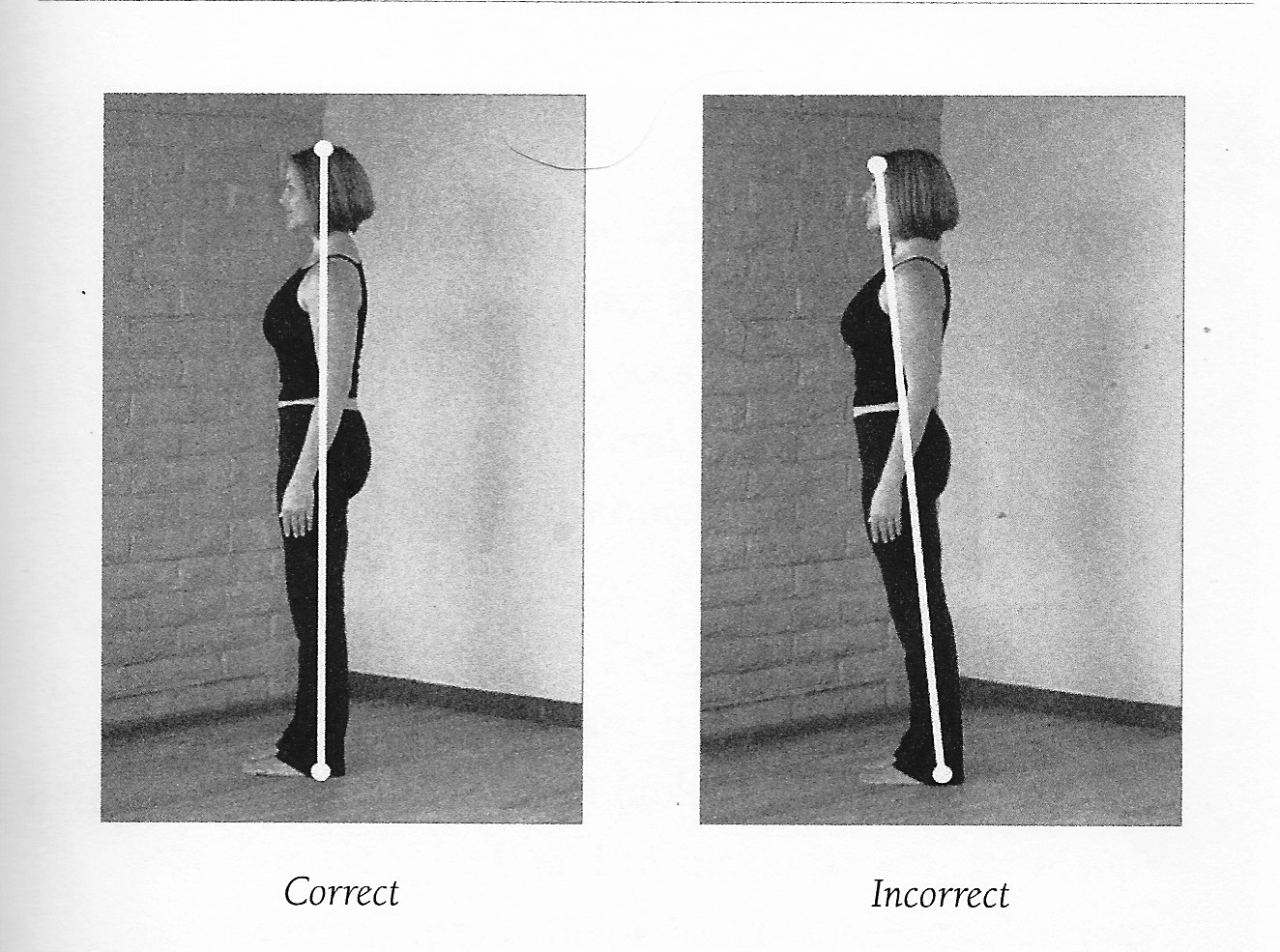
The mass of your pelvis is your center of gravity. If you draw a vertical line from heaven to hell, it should go through the exact center of your pelvis. You really could be the center of the universe. “Should” is key here. Wherever the center or mass of your pelvis is, that is where the bulk of your weight will be. If your pelvis is is vertically stacked over your knees, ankles and heels and vertically stacked under your shoulders & ears, then the bulk of your weight will be over the center of your heels, which is structurally the strongest part of your foot and the only place 100% of your weight should be. When your pelvis is shifted or thrust forward of your ankles/heels, your center of gravity, mass of your pelvis, bulk of your weight loads your forefoot, the weakest part of your foot. The tiny bones, muscles, and other tissues of your forefoot are intended for intrinsic movements and supporting the arches of your feet. Bearing weight on the front of your feet can contribute to plantar fasciitis, bunions, bone spurs, hammertoes, flat feet, metatarsalgia (pain at the base of the toes), and neuropathy.

There are other reasons for vertical stacking of your joints, all of which I will write about in more detail another time.

  • minimizes the forces that cause joint degeneration
  • signals your pelvis and femurs (your “hips”) to build more bone density, making them stronger and less susceptible to fractures

Getting Your Hips Back

My yoga students attest to the broken recordness of my cuing. “Hips back, hips back, hips back.” “Get your hips back over your heels.” “Your hips should be stacked over you knees, which should be stacked over your ankles.” “Keep your pelvis from shifting forward.” “Hips back, hips back, hips, back.” I never tire of saying it.

What and where are your hips anyway? Your hip is not a bone. Your hip is actually a joint made from your pelvis and femurs. Basically, the top of your femur (greater trochanter) fits into the socket or acetabulum at the side of your pelvis. When you place your hands on you “hips,” you are actually placing them on the top of your pelvis.

Here is how to get your hips back:

  1. Stand with your feet aligned – outer edges are straight. See building a bunion.
  2. Shift your weight back, all of it, into the center of your heels.
  3. Press the balls of your feet (not your toes) into the mat, without bringing your weight forward.
  4. With your hands on your hips, the top of your pelvis, gently guide your pelvis back** until your hip joint (about where the side seam of your jeans lies) is stacked directly above the side of your knee, which is stacked directly above your the side of your ankle at the maleolus bone, which is directly over the center of your heel.

**It is critical that you don’t rotate your pelvis back (tuck your tail) or forward (Beyonce your butt), but merely shift it back.

When you back your hips up, it may fee like your butt is sticking out behind you. That’s good. That’s where it should be, behind you. It’s why we call it your rear.

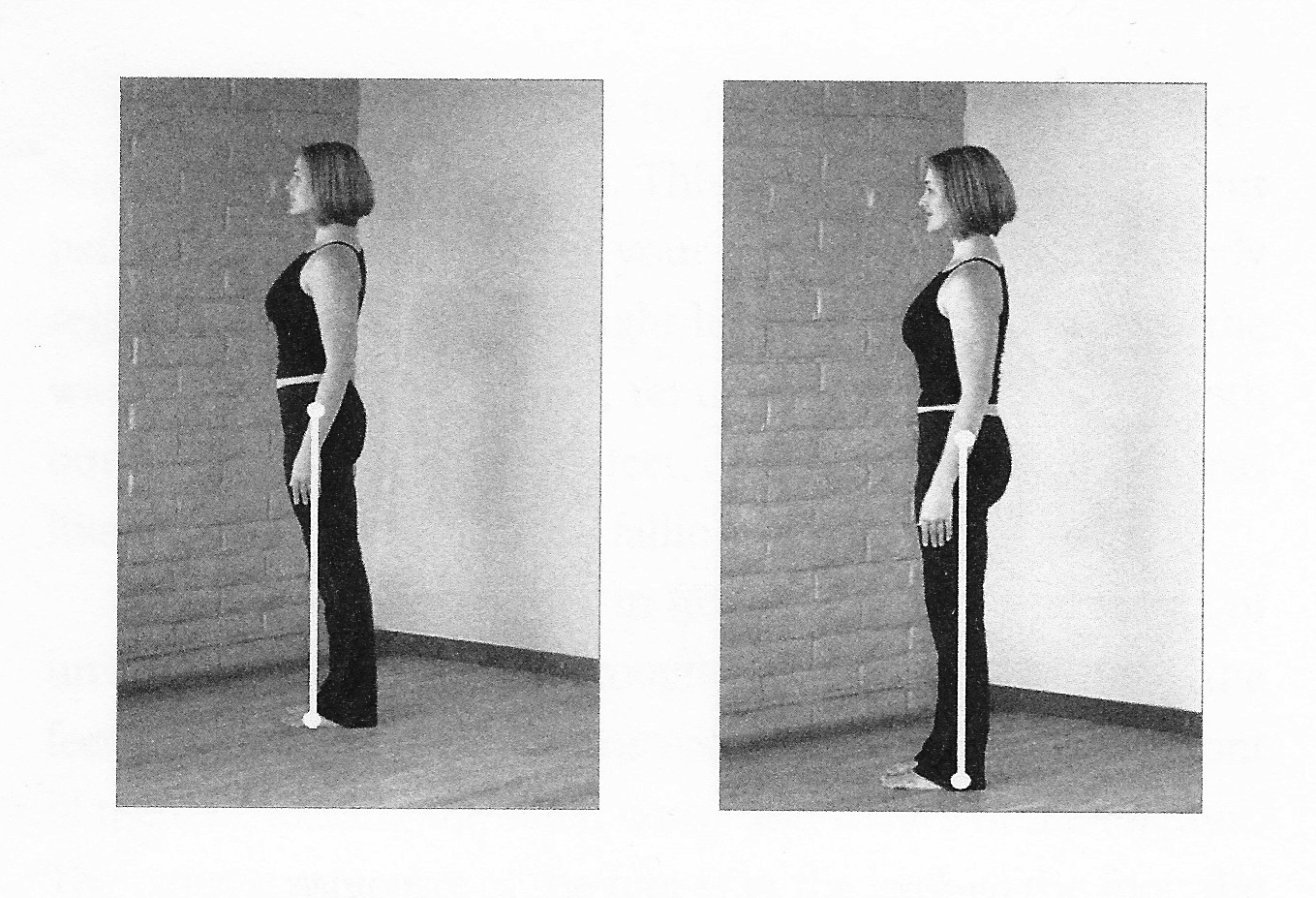
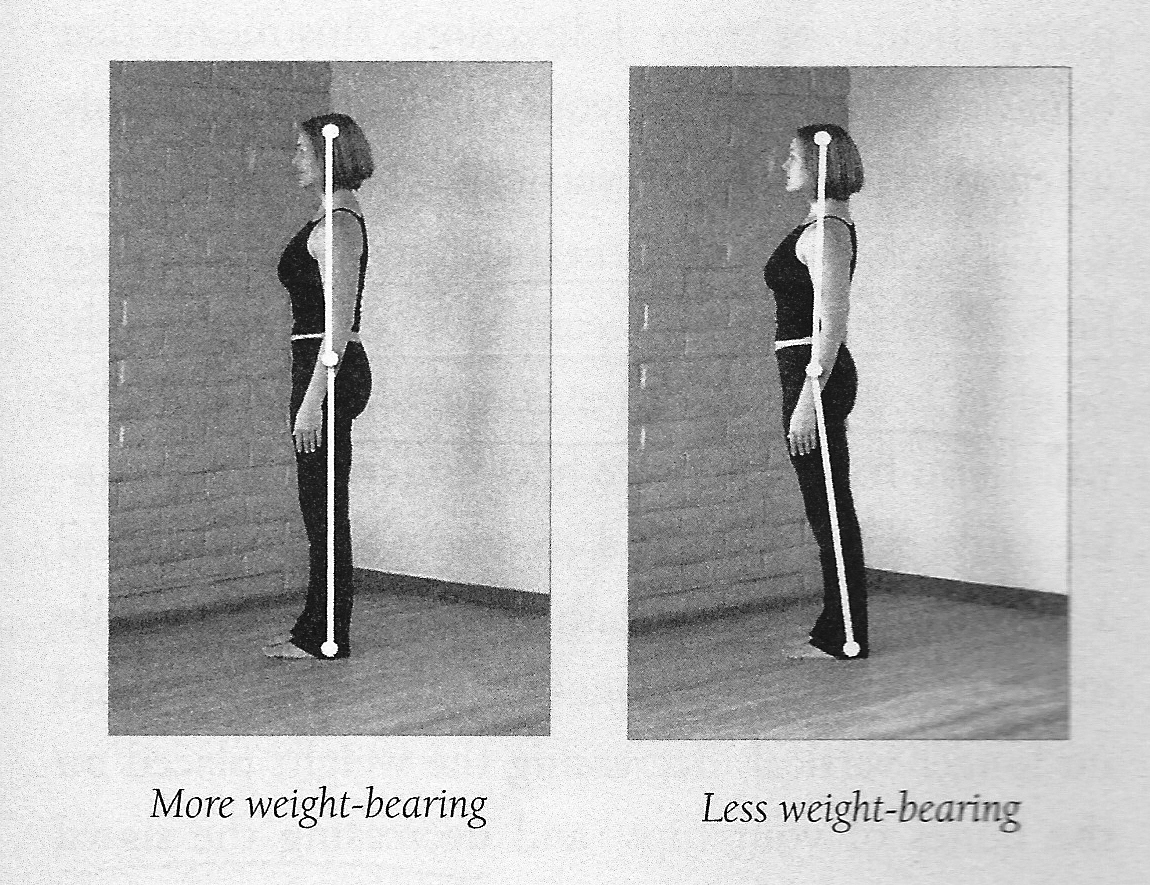
The images below will give you a visual of what it looks like to have your hips thrust forward (losing) or properly backed up (winning). This is from one of my favorite books from my favorite biomechanists Katy Bowman. Her book Every Woman’s Guide to Foot Pain Relief: The New Science of Health Feet is my go-to source for most things feet and is absolutely relevant for men too. In fact, I wish she had named it “Every Human’s Guide…” because other than a few strictly female bits, it is applicable regardless of gender.
Pelvis forward of center of gravit

Pelvis forward of center of gravity

In the image above, The stance on the left shows Katy’s center of gravity, her pelvis, is where it belongs. In contrast, she is definitely not vertically stacked in the stance on the right.
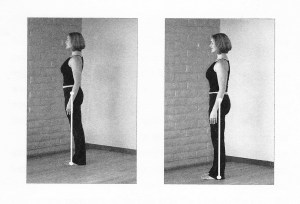
hipsback10002

In the image above, Katy’s pelvis is clearly shifted forward until the bulk of her weight is over her forefoot, which, overtime, could have disastrous consequences for her feet. On the right, her hips are backed up and her pelvis is over her knee, ankles, and heels.
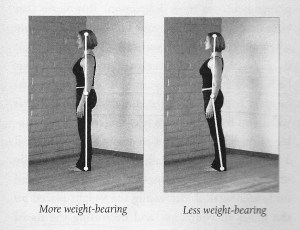
hipsback10003

In the image on the left, Katy’s alignment is signaling the bone cells in her hips to build more bone density because the weight of her torso is stacked vertically. Her stance on the  right, overtime, will prove degenerative to her joints.

I’ll leave you with one final thought. Backing up your hips is a practice. It takes intention, practice, and time to instill this new alignment habit. Start today.

Namaste, Michele