Random, Weird, Playful, Freaky, Wiggly and Varied are the Movements Your Feet Should be Making – January 4, 2015

Our feet have 26 bones and  33 joints each. A whopping 25% of our muscles and nerves are dedicated to our feet and ankles. It’s a lot of real estate. The bottoms of our feet have thick layers of connective tissue called fascia (actually, plantar fascia is a misnomer in that its tissues are aponeuroses or broad, flat bands of tendons – but I’ll accept fascia). Fascia responds well to varied movement, or what I now call “movement nutrition.” Most human feet are severely malnourished, some near death. If you are usually wearing shoes, not moving much, and the movements you do make are repetitive and on a flat, hard surfaces, its the equivalent of only ever eating gruel. What is gruel, btw?  Over the course of the month, you will learn many exercises that will increase movement nutrition for your feet.

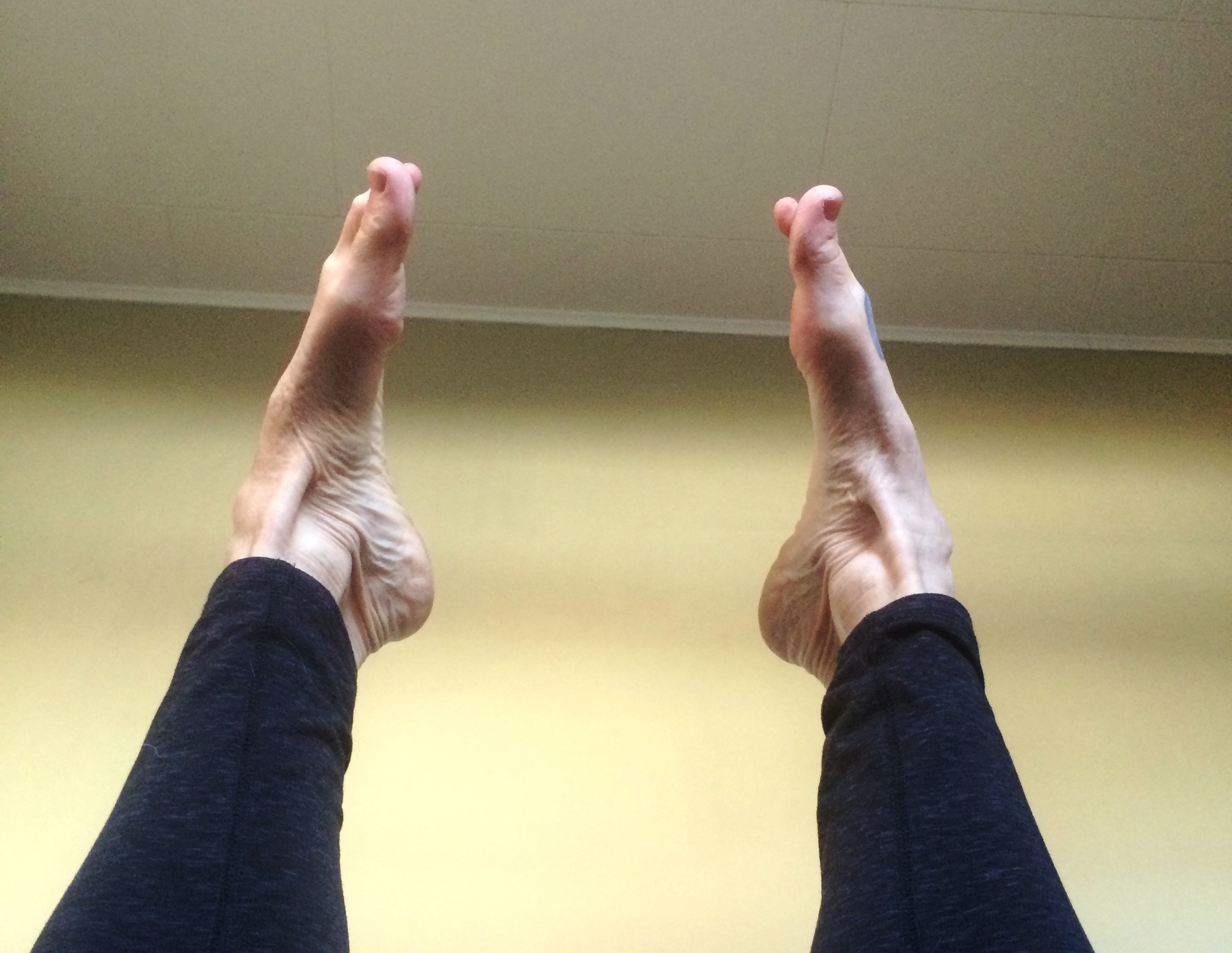
Here is one. Sit on a chair on your sitting bones (not your tailbone). Place a bolster, cushion, or pillow on the floor under your bare feet. Move your feet in random, weird, playful, freaky, wiggly, and varied ways – the stranger and more surprising the better. Stretch the tops, bottoms, sides of your feet; contract your soles; flex, extend, spread, and wiggle your toes; press all parts of your feet into the bolster and roll them around in all directions.

weirdfeet2

weirdfeet

This is the chair I was sitting in. I include it cause its cool.

This is the chair I was sitting in. I include it cause its cool.

Do this for at least five minutes. Every day. Namaste.
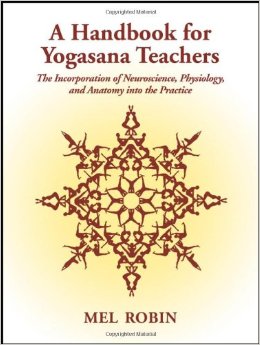
A Handbook for Yogasana Teachers: The Incorporation of Neuroscience, Physiology, and Anatomy into the Practice

yogasana

This is my go-to book for body science as it relates to yoga. Just yesterday, I consulted it to see what Mel Robin knows about thermal sensors. Well, he knows a lot. I can’t recall a time I’ve looked something up and was unable to find it in this book. It is ubercomprehensive – a tome of body science for yoga teachers with over 1000 pages in the second edition.

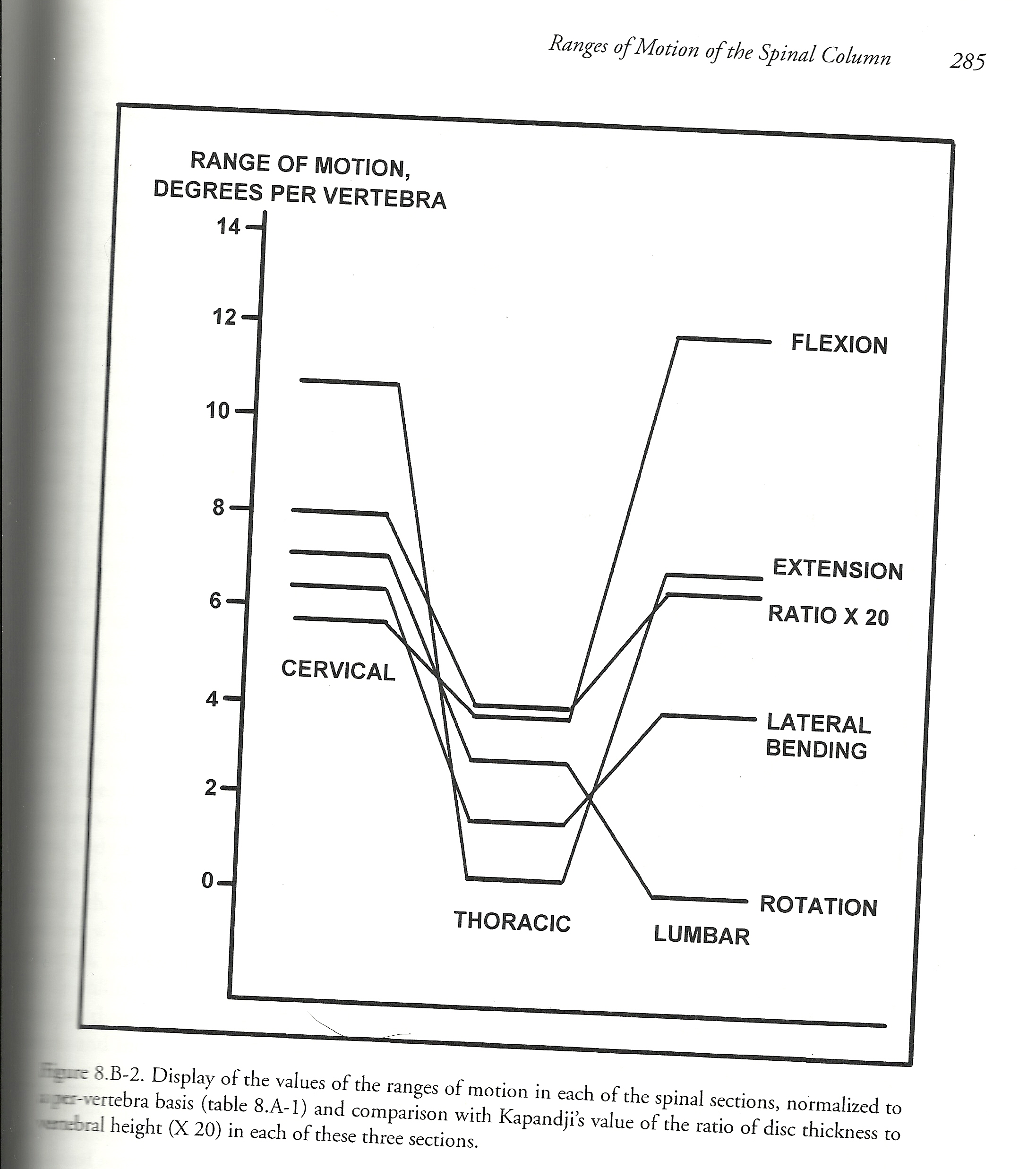
One of my all time favorite sections is “Ranges of Motion of the Spinal Column.” The figure below (from Robin’s book) combined with data from a separate table taught me that the thoracic spine has 3 times the range of motion as the lumbar spine. So, when your yoga teacher instructs you to twist deeper from the base of your spine (as I used to do), you are likely trying to rotate your lumbar spine beyond its safe range of motion. Don’t do that.

The thoracic spine has 3x rotational ROM as lumbar spine.

The thoracic spine has 3x rotational ROM as lumbar spine.

With the publication of William Broad’s controversial book The Science of Yoga: The Risks and the Rewards
(I’ll review it another time), it’s more important than ever for yoga teachers to understand if and how science backs up claims related to the anatomical/physiological benefits of yoga. Robin’s book does just that. It looks at the science behind the asana.

Last I knew, he was working on a new edition…

A Handbook for Yogasana Teachers

Mel Robin
First Edition, 1100 pages
2009


Namaste, Michele

Can You Train Your Feet to Love the Cold? – January 3, 2015

Heavy boots, wool socks, heated buildings, and heavy blankets are adaptations that keep us not only comfortable but alive during winter. Unfortunately, our behavioral adaptations to cold work so well that our physiological adaptations are blunted and the sensory nerves of our feet muted.

Can you train your feet to love the cold or at least respond to it with less strain?

Yes. It turns out you can. Thermal adaptation, the ability of the body to adjust to temperatures such as repeated exposures to cold, takes about two weeks. In studies that repeatedly exposed human feet to cold temperatures (usually 30 min in cold water), after two weeks test subjects experienced increased vasodilation (more blood flow), increased skin temperatures, and reduced pain and tactile sensitivity.

Today’s foot exercise.

  1. Take off your shoes & socks
  2. Stand outside for 1 minute
  3. Repeat several times throughout the day.
  4. Do it again tomorrow, but increase your time to 2 minutes, and repeat several times.
  5. Keep exposing your feet daily for increasing periods of time for 2 weeks.

What you feel, your thermal sensation of cold, is both a sensory and psychological experience. The sensation of cold is formed in the somatosensory cortex of your brain and is determined by things like the number of cold thermoreceptors in your feet, the size of the area exposed, and the intensity of the stimulus.

The psychology piece is really interesting. In my experience, as my pain and tactile sensations decreased, my psychological aversion to cold also decreased and my feet began to feel vibrant and alive during the exposures. I now look forward to the sensate clarity the cold brings to my feet. Since I don’t have the equipment to measure the various physiological adaptations my feet may have made, all I have to go on is sensation and psychology – and both say I’m adapting to the cold!

A caveat – seek medical advise if you suffer from Raynauds or chilblaines or have any other condition for which cold exposure would be contraindicated. And use common sense – don’t stand out there like a dumb bunny for too long and get frost bite!

If you want to read one of the studies I looked at, check out:

Human Cold Exposure, Adaptation and Performance in a Northern Climate
Trainability of Cold Induced Vasodilation in Fingers and Toes

Subscribe to this blog or follow me on Facebook to stretch, strengthen, and mobilize your feet in 2015!

Namaste, Michele

These Feet Were Made for Walking… – January 2

Our feet evolved primarily for walking on varied terrain with hills, bumps, divets, sharp rocks, smooth stones, roots, holes, sand, dirt, grasses, leaves, brambles, water, slick, sloggy, hard, soft  – deforming their 33 joints in a nearly infinite number of positions while naked. Our feet did not evolve to wear thick, rigid, tight, positive heeled shoes while walking on hard, flat artificial surfaces. Our feet are not happy. Our feet could be so much more.

A little science bit on the gait cycle. While walking looks easy, it is an extremely complex and coordinated event. When we walk, the following four distinct events occur during the stance phase, when the foot is in contact with the ground.

  1. Heel strike (HS)
  2. Foot flat  (FF)
  3. Heel rise (HR)
  4. Toe off (TO)

Walking with shoes on flat surfaces mutes/blurs these distinct actions, resulting in gait patterns that look more like stomping or shuffling.

To get your feet walking optimally with maximum joint involvement, try this. Remove your shoes and slowly exaggerate each action in the gait cycle. It’s OK to do this on carpet if you are not used to going barefoot. If you have rugged feet, try this outside on grass. Concentrate first on your right foot only, letting the left foot come along for the ride. Then concentrate on your left foot. Then both feet. If you feel like you are walking the bridal march, you are doing well.

  1. As you step your right foot forward, gently land your heel on the ground (heel strike)
  2. Slowly allow the remainder of your foot to make contact with the ground, articulating one joint at a time as you lay your foot down. (foot flat)
  3. Rise your heel off the ground, again articulating each joint until you are on the ball of your foot. (heel rise)
  4. Push your toes firmly away from the ground (toe off)

In the kind words of Thich Nhat Hanh, as you walk, “kiss the earth with your feet.”

Subscribe to this blog or follow me on Facebook to stretch, strengthen, and mobilize your feet in 2015!

Namaste, Michele

Happy New Feet! – January 1, 2015

For the month of January, I will post something new each day that you can do to stretch, strengthen, and mobilize your ankles & feet.

Muscles in your legs that have attachments in the foot (extrinsic foot muscles) are targeted with the following exercises. They are meant to bring mobility to your ankles and strengthen and stretch the flexor and extensor muscles in your legs and feet. Moving your ankles through their full, natural range of motion keeps them supple and causes an increase in blood flow and waste removal to the lower reaches of your body, which means your heart won’t have to work so hard.

Ankle Plantar Flexion (point) and Dorsiflexion (flex)

  1. Lie on your back with your hips flexed and the soles of your feet reaching towards the sky.
  2. Point and flex your ankles slowly 20 times
  3. Lower your knees to your chest and rest.

Foot Inversion and Eversion

  1. Lie on your back with your hips flexed and the soles of your feet reaching towards the sky.
  2. Turn the soles of your feet towards (invert) and away (evert) from one another 10 times. Foot eversion is less dramatic-appearing than inversion.
  3. Turn your soles towards each other (invert) and hold for five deep breaths
  4. Turn your soles away from each other (evert) and hold for five deep breaths
  5. Lower your knees to your chest and rest.
Inverting my feet

Inverting my feet

Ankle Circles

  1. Lie on your back with your hips flexed and the soles of your feet reaching towards the sky.
  2. Rotate both ankles, clockwise, in big, slow sweeping circles. Try to do 20 of them. Rest.
  3. Repeat, rotating both ankles counter clockwise 20 times.
  4. Lower your knees to your chest and rest.

For more exercises that benefit your feet from world-renowned biomechanist Katy Bowman, try her DVD Fix Your Feet. You can find it in her Healthy Foot Kit.

Healthy_Foot_Kit-1


Subscribe to this blog or follow me on Facebook to stretch, strengthen, and mobilize your feet in 2015!